+86-13944157533
  cchm@hmfoodtech.com
+86-13944157533
cchm@hmfoodtech.com
cchm@hmfoodtech.com
+86-13944157533
cchm@hmfoodtech.com
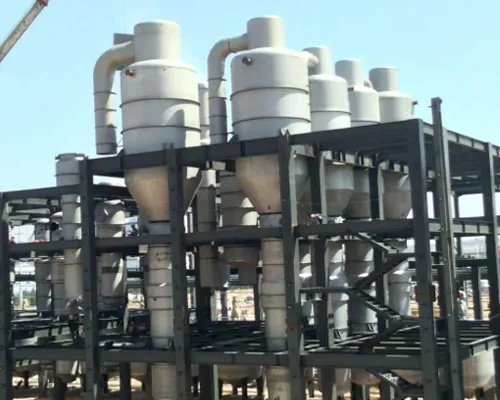
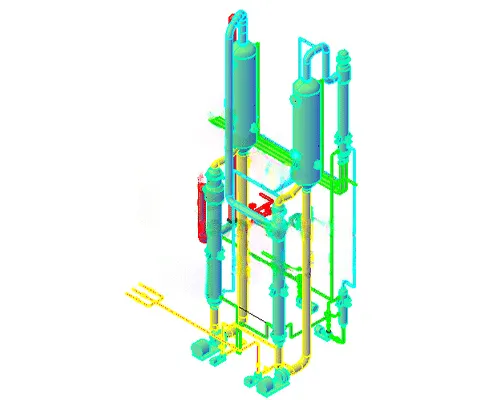
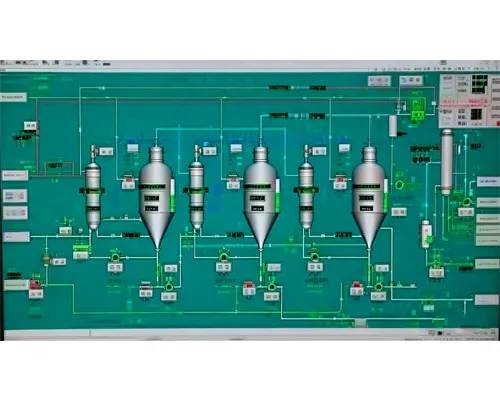
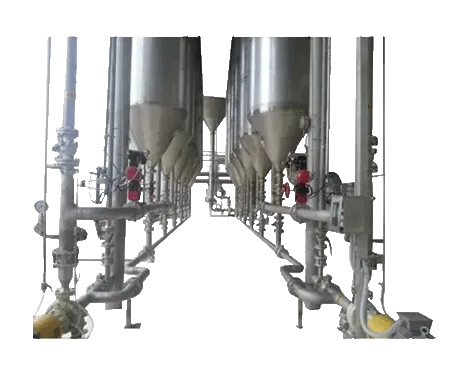
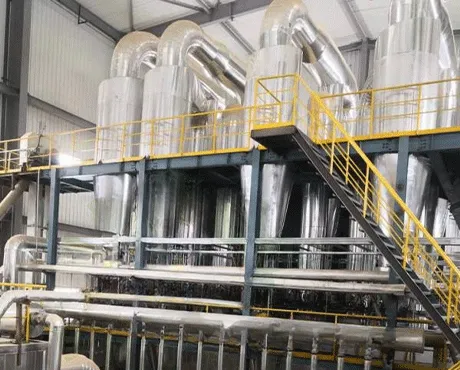
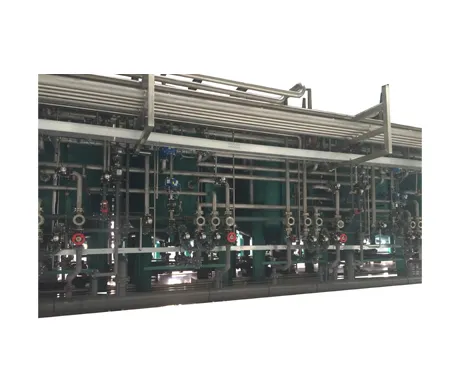
HM-CC-T series continuous evaporative crystallization system is designed and developed by our factory with patent applied.
Core of crystallization process control:
1. Design enough long crystal time according to crystal characteristics to create an environment conducive to the growth of crystal structure.
2. Adjust the direction of materials, control the number of microcrystals, realize the whole process control of seed generation, seed growth, elimination of microcrystals, growth of qualified particles, and timely discharge of qualified particles.
3. Most businesses take crystallization as the process of concentration. It is believed that the concentration reaches supersaturation, the crystal forms naturally, and there is no awareness and measures to control the crystal quality. The control of the crystal purpose is ignored, and the influence of crystallization on separation and drying is not fully considered, which makes the subsequent section treatment more difficult due to the crystallization. Therefore, the purpose of crystallization is to improve the overall yield and product quality, and reduce the product production cost.
Model | Ev capacity | Steam consumption kg/h | Each effect vacuum, mmHg | Each effect temp. ℃ | Steam pres. | Feed DS,% | Discharge DS, % | ||||
1st effect | 2nd effect | 3rd effect | 1st effect | 2nd effect | 3rd effect | ||||||
HM-CC1.0-T | 1000.0 | 330-400 | 300 | 510 | 750 | 85 | 76.0 | 55 | 0.5-0.6 | 5-6 | 55-65 |
HM-CC3.0-T | 3000.0 | 990-1200 | |||||||||
HM-CC4.5-T | 4500.0 | 1485-1800 | |||||||||
HM-CC6.0-T | 6000.0 | 1980-2400 | |||||||||
HM-CC9.0-T | 9000.0 | 2970-3600 | |||||||||
HM-CC12.0-T | 12000.0 | 3960-4800 | |||||||||
HM-CC15.0-T | 15000.0 | 4950-6000 | |||||||||
HM-CC20.0-T | 20000.0 | 6600-8000 | |||||||||
It is used for the products with general requirements on crystal shape and size, and can achieve high concentration discharging.
According to the characteristics of materials and the evaporation capacity, it can be designed as a single-effect or multi-effect evaporative crystallization system.
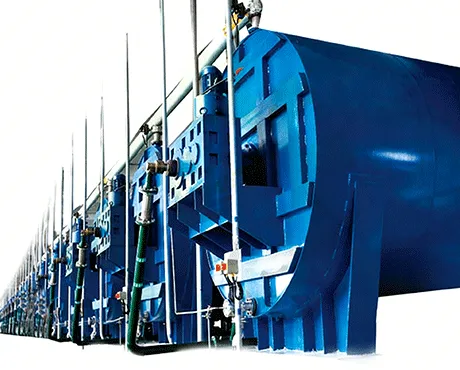
The unique design of the crystallizer can meet the intermittent crystallization, semi-continuous crystallization and continuous crystallization system. It can meet the continuous feed, continuous discharge process requirements.
The whole process system evaporates under the vacuum condition, with relatively low temp., fast evaporation speed, high evaporation concentration, and the relatively high viscosity of the liquid material is not easy to scale or block, which can achieve the maximum crystal ratio under the same energy consumption.